Crumbs, Caution and Calm: A Snack Table Plan for Allergy-Aware Mobile Creches
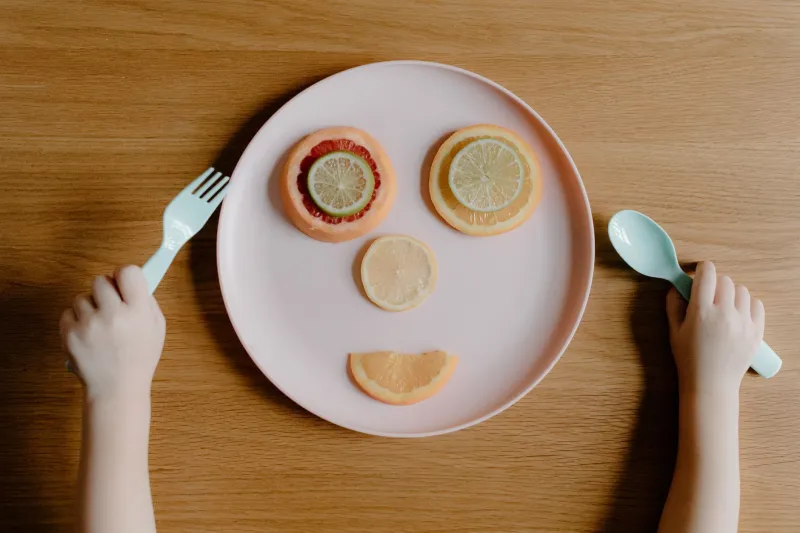
Every mobile creche has one piece of furniture that causes more fuss than any other. Not the buggy park. Not the craft table. It's the snack table. It looks so simple: a few plates, a jug of water, some fruit. But it's the place where allergies, fussy eating, venue rules and small children with strong opinions all arrive at once.
We've set up snack tables in village halls with a single wonky trestle, in conference rooms where the carpet was worth more than our van, and in marquees where the nearest tap was a good two minutes away. This is what we've learned.
Rules That Nobody Argues With
The best snack tables run on four rules, said out loud at the start of the session and repeated kindly as needed:
- Grown-ups serve, children choose. Children never help themselves from a communal plate, and they never share food with each other. Not even a grape. Not even a crisp.
- We sit down to eat. No walking, no running, no eating in the soft play or on the climbing frame. Choking risk goes up the moment a child is moving and distracted.
- Water is the drink. Squash and juice bring sticky floors, big feelings and a queue for the loo. Water in named cups, and a jug with a lid.
- Food stays at the table. This one saves the venue's carpet, the organiser's deposit and our own sanity.
Say them warmly, not like a warning notice. Children respond well to a cheerful "we sit down for snacks in this room" far more than to a list of don'ts.
The Fourteen Names on the Label
In the UK, fourteen allergens must be declared: celery, cereals containing gluten, crustaceans, eggs, fish, lupin, milk, molluscs, mustard, nuts, peanuts, sesame, soya and sulphites. Most creche snacks land in at least three of those without trying.
So we keep it deliberately plain. Fruit, plain biscuits, rice cakes, breadsticks, cheese, cucumber, a bit of plain cake at parties. Nothing with a long ingredient list, because long ingredient lists mean long conversations with parents and a higher chance of a mistake.
A few practical habits go a long way.
Separate serving tools for everything. One set of tongs per tray, or clean hands and a scoop. A knife that's touched a cheese board doesn't go near the fruit.
A sealed allergy box for each child who needs one. Named, labelled, kept on a shelf above the table and handed directly to that child by a member of staff. This is the single most reassuring thing you can do for a parent at drop-off.
Clear signage, honest wording. We say "no nuts in the food we provide" rather than "nut-free venue", because the second one we can't promise. Parents bringing their own food should know what's on offer and what isn't.
Wipes, and plenty of them. Hands before, table after. A cloth and a spray bottle under the table so nobody has to go hunting.
If the venue has a kitchen and you're using it, ask about colour-coded chopping boards. Most halls have them. Most organisers don't know they do.
Timing Is Half the Battle
A snack table that's open all session turns into a grazing station, and grazing stations turn into children who aren't hungry at lunch and parents who wonder why their child came home wired.
We run two windows, usually. One mid-morning, around 10am, and one mid-afternoon, around 3pm. Each is open for about twenty to twenty-five minutes and then it closes, tidily and without apology. Children cope well with this. Adults sometimes need the reassurance that lunch is still happening.
Avoid snacks immediately before high-energy play, and avoid them right before a rest period if the food is sugary. A plain, slow-release snack does far more for a calm final hour than a biscuit ever will.
And build in a sit-down pause. Twenty minutes at a table with a grown-up nearby is a rest in disguise. We often put the snack table near the quiet end of the room, well away from the door and the main play traffic, so it feels like a pause rather than a pit stop.
Talk to Parents Before the Day
Our booking form asks three food questions: does your child have any allergies or intolerances, what does your child actually eat at home, and is there anything they'll refuse outright.
That third question matters more than people expect. A child who won't touch anything unfamiliar will not eat a hummus wrap just because it's on offer, and a hungry four-year-old at 4pm is nobody's idea of a good time. If we know they'll eat plain breadsticks and a banana, that's what goes on the tray.
Ask about adrenaline auto-injectors too. Where it's kept, who carries it, whether the child is trained to carry it themselves, and what the parent wants us to do. Write it down. Say it back.
The Small Details That Do the Heavy Lifting
Six things we now never skip:
- A bin next to the table, with a lid, and a spare bag taped to the side.
- A water station at child height, separate from the food, so cups don't end up in the fruit bowl.
- Named plates or a simple colour system for siblings, because identical plates cause identical arguments.
- A chair for a grown-up at the table, not just standing nearby. Sitting changes the whole atmosphere.
- High chairs turned slightly away from the busiest corner, so babies aren't watching a soft-play riot while eating.
- A folded cloth and a spare set of wipes in the staff bag, because something always goes over.
None of this is complicated. It's just the difference between a snack table and a small daily crisis. Set it up once, explain it clearly, and the children will do the rest. Usually with their mouths full.