When the Headcount Doesn't Add Up: A Calm Lost-Child Plan for Busy Event Creches
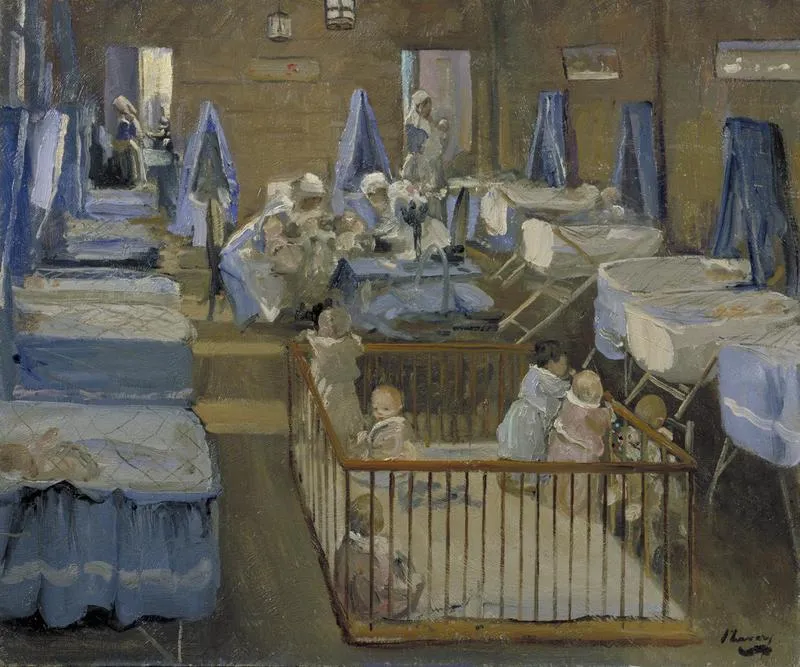
Photo: John Lavery, Public domain, via Wikimedia Commons
Every event creche has a drawer of odd socks, a pile of unnamed jumpers, and a story about the child who took a wrong turn towards the tombola. Most of those stories end with a giggle and a hand-held walk back to the craft table. But the possibility of a genuinely lost child is the reason a mobile creche needs a protocol that is quietly rehearsed, not dramatically improvised.
At CrecheMobile UK, we think of a lost-child plan as part of the same calm scaffolding as snack time and handover. It should be there in the background, like a fire drill, so that if the headcount does not add up, nobody has to invent the next step on the spot.
Start before the doors open
The strongest lost-child protocol begins at the booking stage. For event organisers, that means asking families to provide an emergency contact, a list of authorised collectors, and any additional needs that might affect how a child responds if they become separated. At sign-in, a simple wristband or sticker system does more work than most people realise. Use a unique reference rather than a child's full name on display. If your safeguarding policy and data protection arrangements allow it, add the parent's mobile number to the band; otherwise, use an ID that matches the register at the desk. Explain it to the child in plain terms: 'This is your ticket back to us.'
Before the first family arrives, walk the venue with the organiser. Mark the main entrance, fire exits, toilets, café, stage, first-aid point, quiet room, and venue control on a simple gate map. Decide where the creche perimeter sits and who is watching it. In a busy village hall or conference centre, the creche cannot secure every door in the building, but it can hold a clear handover line. High-visibility tabards for staff help parents and venue teams spot the right people quickly.
Then build a headcount rhythm. Count on arrival, before and after outdoor or garden play, before snack, before collection, and at every transition. Two staff should count independently where possible. A number is useful, but names and faces are better. The point is not to create a military operation; it is to make checking so normal that it never feels like a sign of panic.
The first 60 seconds
If a child is missing, the first minute matters, but it should not be chaotic. One staff member stays with the group. The lead does an immediate scan and headcount, then contacts venue control using the pre-agreed phrase and radio channel. Do not send every adult off searching and leave the remaining children understaffed.
Give venue control a clear description: first name, age, what the child is wearing, any distinguishing features, where they were last seen, and the likely direction. Ask for gate checks, toilet checks, café and queuing areas, buggy parks, and any quiet corners. Staff at the creche boundary hold their positions. Venue control can check CCTV where available and coordinate a wider sweep.
If the child is not found after a rapid, co-ordinated search of the immediate area, call 999. Do not wait for a polite grace period if you believe the child is at immediate risk. In the UK, a missing child is a police matter, and event organisers should never feel they have to manage it quietly to avoid disruption.
What we say, and what we do not
Communication with venue control should be direct and factual: 'This is the creche in the [room name]. We have a missing child, age six, wearing a red raincoat and blue wellies, last seen near the craft tables. We need gate checks and a toilet check now.' Avoid vague requests for help. Be specific about what you need and where.
Do not broadcast a child's full name over a public PA system unless it is necessary and agreed with the parent and police. A first name and description are usually enough. Keep the parent informed throughout. Designate one staff member to stay with them, because the wait is often harder than the search.
When the child is found, get down to their level and use their name. Say: 'You're safe. I've been looking for you. Let's find your grown-up together.' Avoid 'Why did you wander off?' and avoid scooping them up if they do not want to be held. Check for injury, then bring them to a quiet space. Verify the adult before reunification: ask the child, 'Is this your grown-up?' and cross-check the wristband, register, or authorised collector list. If the child is non-verbal, use the register and ask the parent for identification. Log the time, actions, and outcome.
The quiet work afterwards
A lost-child moment is not the end of the story. It is information. Review the gate map, the headcount points, the staffing ratios, and the signage. If a parent was involved, speak to them privately and clearly. If they were not, there is no need to alarm every family in the room. Update the risk assessment, brief the team, and keep the language calm. A practised response is not about being perfect. It is about being steady, kind, and quick to close the gap between a child and the grown-up who is waiting for them.